


 Pristupačnost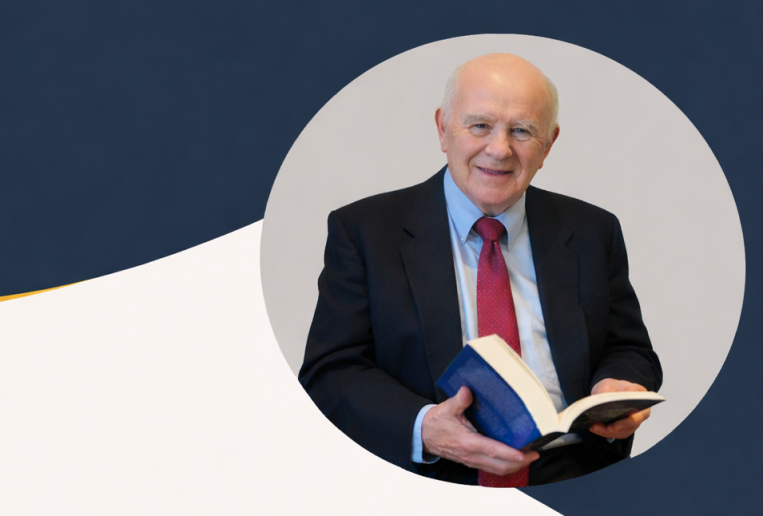
On Wednesday, 8 April 2026, from 10:00 to 11:30, Professor Jeremy Shearmur will deliver a guest lecture at the Library of the Faculty of Croatian Studies, University of Zagreb.
The lecture, entitled
is organized by the Doctoral Studies Council of the Faculty of Croatian Studies. The event is open to all interested students, faculty members, and members of the wider public. The lecture will be followed by a discussion.
Abstract
“In this paper, I will raise some broad issues relating to Karl Popper’s approach to knowledge, and some questions relating to the organization of academic disciplines which they open up. Popper’s ideas are typically thought of in terms of his stress on the fallibility of our knowledge, and the idea that we may aspire for truth. He also stressed that our understanding of the world, and, indeed, even our empirical knowledge, is influenced by a plurality of fallible theories and expectations. And he argued that we should try to learn from one another: something that is possible even if we don’t share fundamental ideas. Popper’s views may usefully be contrasted with empiricist ideas about pure data simply being available to us, if we proceed carefully and analytically. But they may also be contrasted with Thomas Kuhn’s ideas about scientific activity consisting of puzzle-solving within uncritically held frameworks of ideas and practises, concerning which revolutions take place from time to time. They also contrast with those strands in postmodernism and poststructuralism in which there are simply different contending perspectives. After introducing and exploring these ideas, I will pose the question: if there is anything to them, what consequences might this have for how we could usefully organise our academic institutions? I would hope that the paper should give rise to interesting critical discussion, in the course of which I could offer additional explanation and arguments, depending on the interests and concerns of those with whom I am dialogue.”
About Professor Jeremy Shearmur
Jeremy Shearmur is Professor Emeritus at the Australian National University and one of the most distinguished contemporary scholars of Hayek and Popper. For eight years, he served as Karl Popper’s assistant at the London School of Economics. He has taught at the Universities of Edinburgh and Manchester, as well as at George Mason University, and now lives in Dumfries, Scotland.
He was educated at the London School of Economics, where he was taught by Popper, Lakatos, Watkins, Musgrave, Feyerabend, and Gellner, and also attended the seminar of Michael Oakeshott. He later worked as Popper’s assistant and went on to teach philosophy at the University of Edinburgh, where he also participated in research seminars in Scottish philosophy with George Davie. He subsequently taught political theory at the University of Manchester, served as Research Associate Professor at George Mason University, and later taught political theory and philosophy at the Australian National University.
Professor Shearmur is the author of books on Hayek and on Popper’s political thought. He is also the co-editor of Harry Acton’s Morals of Markets and Popper’s After the Open Society. He is currently working on studies of Lakatos, Hayek, and Popper, as well as on a book entitled Living with Markets.