


 Pristupačnost
The Department of Sociology was established in 1992 and is one of the core disciplines of the Faculty of Croatian Studies. The concept of sociology studies focuses on the application of sociological theories and social science methodology for understanding social processes and phenomena in the specific context of Croatian society and comparatively in a European and global perspective. The study of sociology aims to train highly qualified sociological research personnel with professional research and analytical skills necessary for productive work in the public and private sectors. The sociology program at the bachelor's and master's levels is organized according to current international scientific standards.
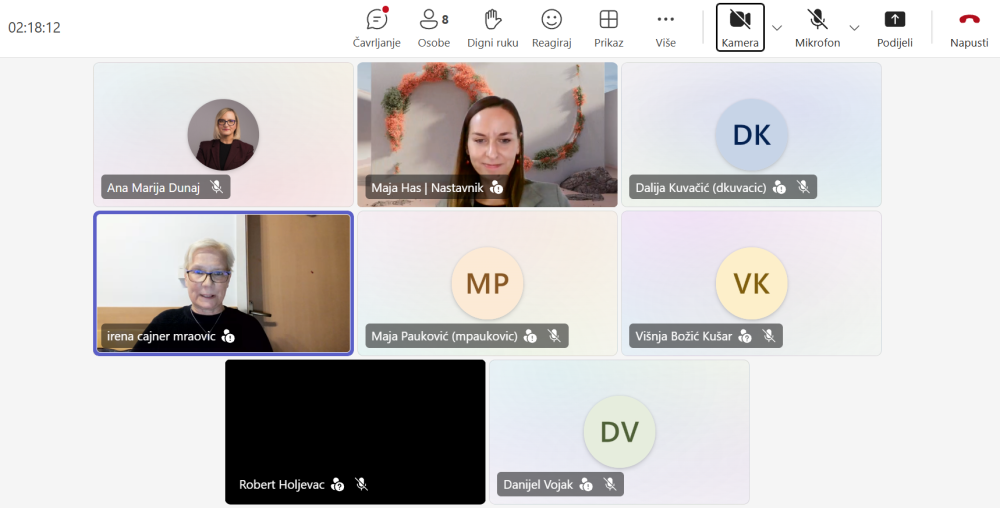
Prof. Irena Cajner Mraović, PhD, and Asst. Prof. Ana Marija Dunaj, PhD, from the Department of Sociology at the Faculty of Croatian Studies, University of Zagreb, participated on Thursday, 24 September, in the 4th International Scientific and Professional Conference “Continental Croatia: Historical Context, Current Issues and Future Perspectives”, held on 24 and 25 September in Đakovo. They presented their research online as part of the afternoon online panel.
Irena Cajner Mraović presented the paper “Female Homicide Victims in Urban and Rural Areas of Continental Croatia: Are There Differences?”, co-authored by Mirjana Kondor-Langer and Avgustin Pavičić from the University of Applied Sciences in Criminal Investigation and Public Security. The study was conducted on a sample of 95 cases in continental Croatia between 2016 and 2024. The results show that female victims in rural areas were statistically significantly more likely to live with the perpetrator, had lower levels of education, and were in poorer financial circumstances compared to victims in urban areas. The findings highlight the importance of taking into account the specific social, economic, and relational characteristics of victims when designing preventive measures for urban and rural settings.
Asst. Prof. Ana Marija Dunaj, PhD, presented the paper “Digital Inclusion and the Use of E-Government: The Role of E-Participation and Perceived Service Quality in the Case of Međimurje County,” co-authored by Asst. Prof. Marija Zelić, PhD, also from the Department of Sociology at the Faculty of Croatian Studies. The study, conducted on a sample of 351 respondents, showed that citizens’ e-participation through the official social media profiles of cities and municipalities, as well as the perceived quality of e-government, were significantly associated with the use of electronic public services. The final regression model explained 35.2% of the variance in e-government use, with e-participation emerging as the strongest predictor. The findings emphasize the importance of high-quality digital public services, participatory digital channels, and the development of citizens’ digital competencies.
The International Scientific and Professional Conference “Continental Croatia” brings together researchers, experts, and practitioners from various disciplines with the aim of providing an interdisciplinary examination of social, economic, demographic, migration-related, historical, cultural, and other processes relevant to the development of continental Croatia. The conference seeks to bring together different academic and professional perspectives and foster dialogue on development potential and quality of life in continental Croatia.