

 Pristupačnost
The Department of Sociology was established in 1992 and is one of the core disciplines of the Faculty of Croatian Studies. The concept of sociology studies focuses on the application of sociological theories and social science methodology for understanding social processes and phenomena in the specific context of Croatian society and comparatively in a European and global perspective. The study of sociology aims to train highly qualified sociological research personnel with professional research and analytical skills necessary for productive work in the public and private sectors. The sociology program at the bachelor's and master's levels is organized according to current international scientific standards.
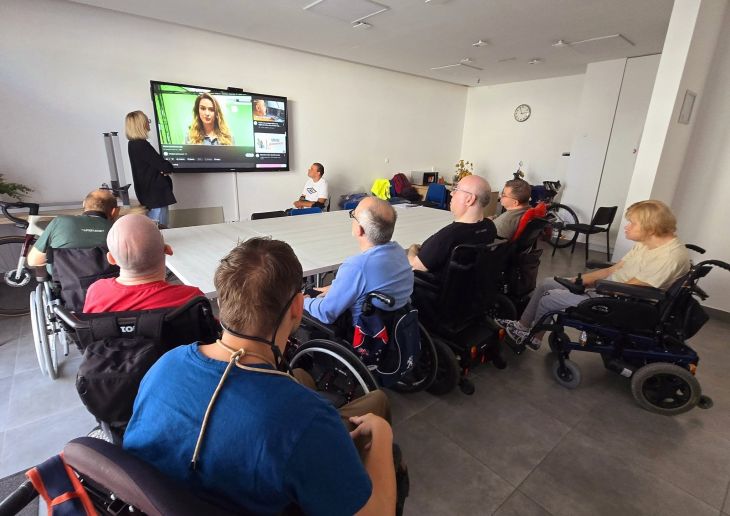
On Wednesday, 16 September, the fourth educational workshop within the institutional project “Dimensions of Digital Inclusion and Exclusion in Croatian Society (DIGI-HR)”, implemented by the Faculty of Croatian Studies, University of Zagreb, was held at the Zagreb Centre for Independent Living. The project activities are aimed at developing the digital competencies of the Centre’s users to support their safer, more independent, and active participation in digital society.
The workshop, entitled “Truth or Deception? Fake News and Disinformation – How to Recognize Them,” was delivered by Assistant Professor Ana Marija Dunaj from the Department of Sociology at the Faculty of Croatian Studies, University of Zagreb.
The workshop began with a discussion on the importance of media literacy in today’s information environment, where accessing information has never been easier, yet verifying it has never been more difficult. Participants learned that media literacy involves not only the ability to use digital devices and access information, but also the ability to analyze and critically evaluate information and understand how media messages are created and disseminated.
Particular attention was given to distinguishing between information, opinion, unintentional errors, satire, and different forms of information disorder. The differences between disinformation—content created or disseminated with the intention to deceive; misinformation—false or inaccurate content shared by people who believe it to be true; and malinformation—accurate information used with the intention of causing harm—were also explained.
Participants were introduced to the development of the term “fake news” and the reasons why the terms disinformation and misinformation provide greater conceptual precision.
Through concrete examples, four common types of misleading content were presented: false connections between headlines and the actual content, false context in which authentic content is presented as relating to a different event, manipulated content such as photomontages and deepfakes, and entirely fabricated content. It was emphasized that disinformation does not have to be completely fabricated; genuine photographs, videos, or data are often used with altered headlines, dates, locations, or contexts.
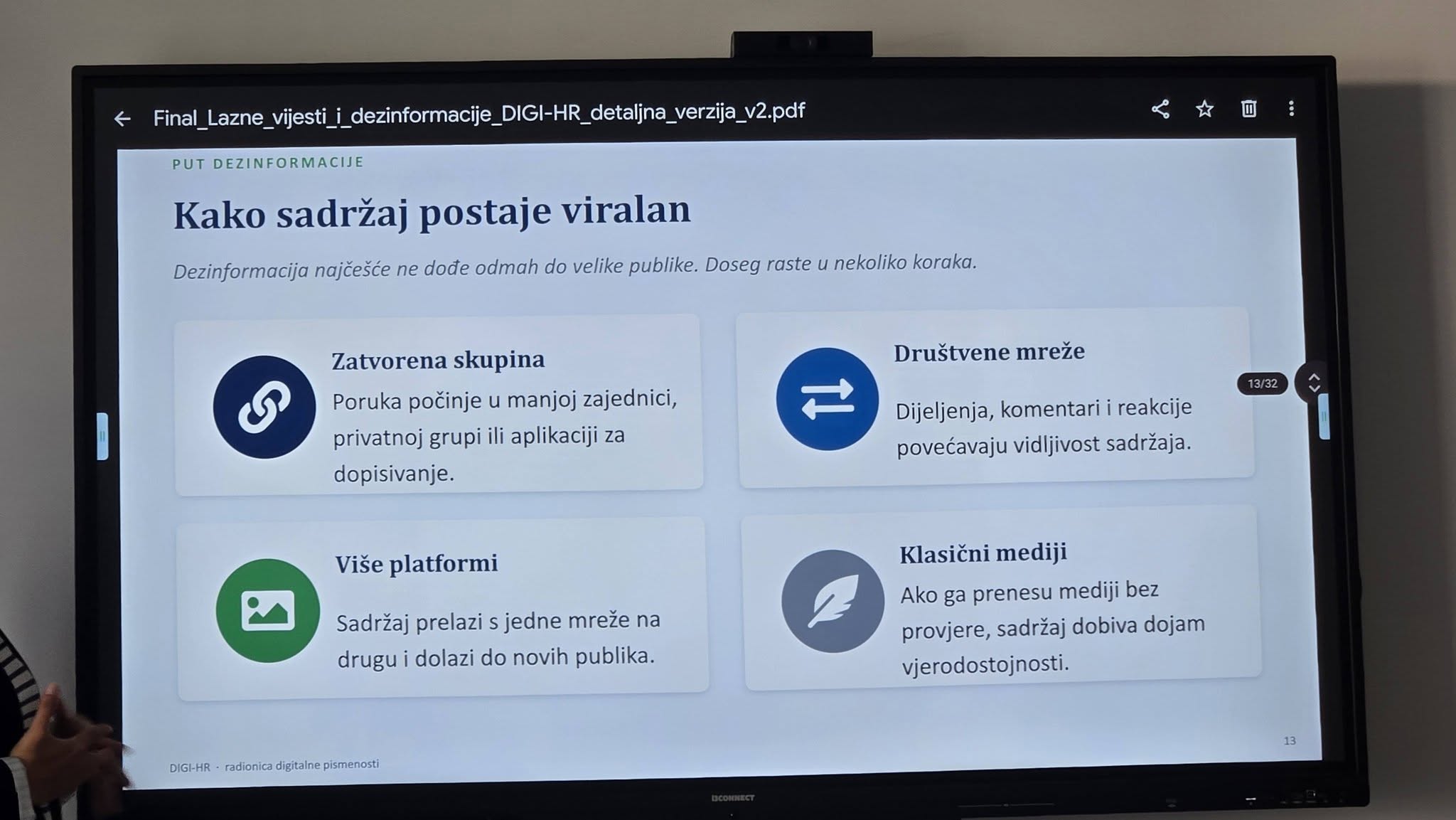
An important part of the workshop focused on how disinformation goes viral. Participants were shown how a message can spread from a closed group or messaging app to social media and other platforms, eventually reaching traditional media. The discussion also addressed the roles of those who create and share disinformation, as well as bots, which can increase the visibility of certain content through automated sharing and create a false impression of its popularity.
The workshop also explored why people sometimes believe inaccurate information or share it with others. A distinction was made between the motives for deliberately spreading disinformation—which may include financial gain, political influence, social status, or an intention to cause harm—and the unintentional sharing of inaccurate content by users who believe they are warning or helping others.
Particular attention was also given to the spread of disinformation during crises, when an increased need for information and the large volume of available content can create fertile ground for rumors and inaccurate information.
The concepts of filter bubbles and echo chambers were explained, including how repeated exposure to similar content can create the impression that a particular claim is widely accepted. The workshop also addressed new challenges posed by artificial intelligence and deepfake technology, which can be used to create convincing photographs, videos, and audio recordings of events that never occurred.
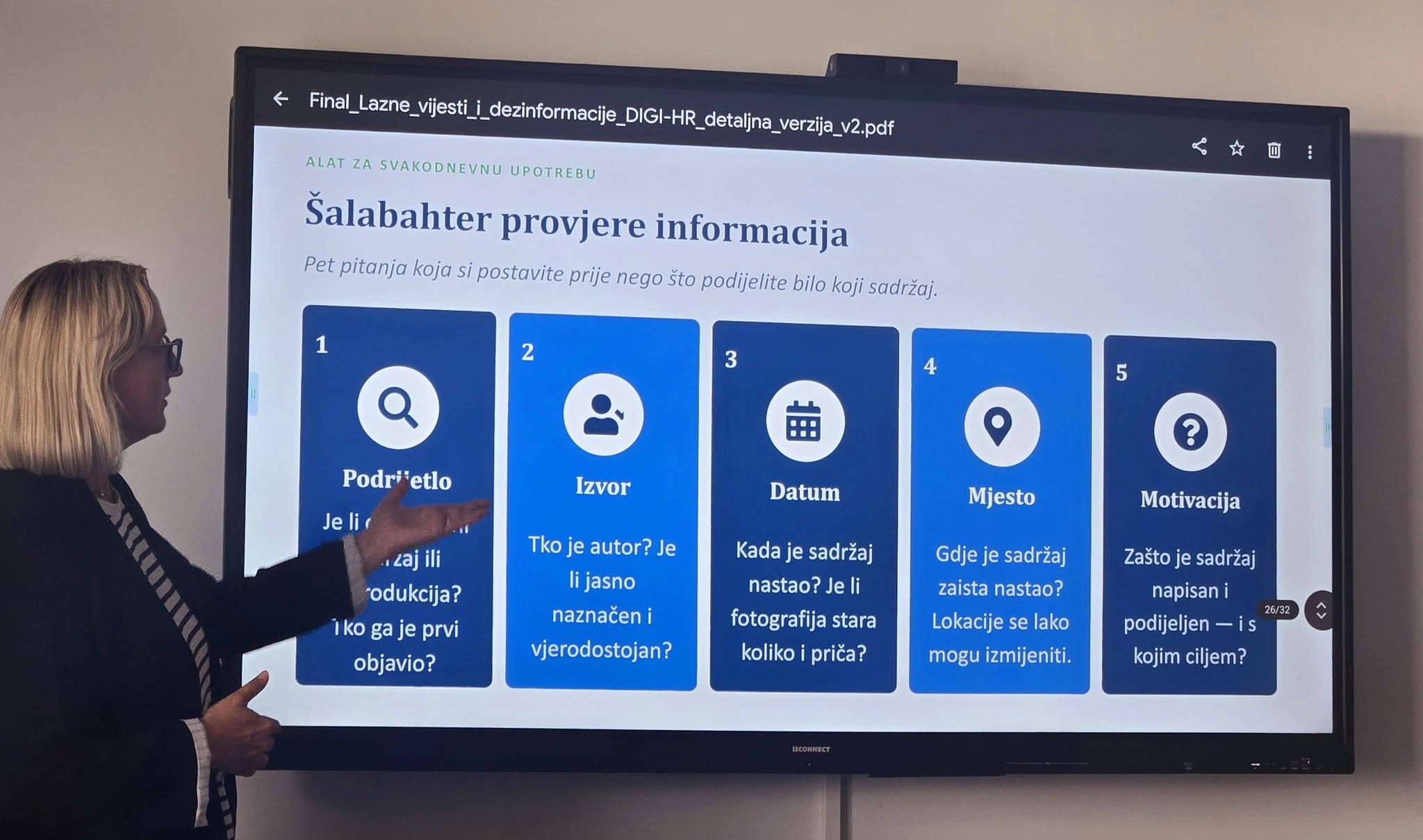
The second part of the workshop focused on the practical identification and verification of suspicious content. Warning signs included messages that demand immediate sharing, provoke strong emotional reactions, lack a clearly identified source, author, or date, or promise “miracle solutions” or information allegedly being hidden from the public.
At the end of the workshop, participants received materials summarizing the key concepts, along with a practical checklist for verifying information.
The next workshop is scheduled to take place in one week and will focus on services available through Croatia’s e-Citizens (e-Građani) system.