


 Pristupačnost
The Department of Sociology was established in 1992 and is one of the core disciplines of the Faculty of Croatian Studies. The concept of sociology studies focuses on the application of sociological theories and social science methodology for understanding social processes and phenomena in the specific context of Croatian society and comparatively in a European and global perspective. The study of sociology aims to train highly qualified sociological research personnel with professional research and analytical skills necessary for productive work in the public and private sectors. The sociology program at the bachelor's and master's levels is organized according to current international scientific standards.
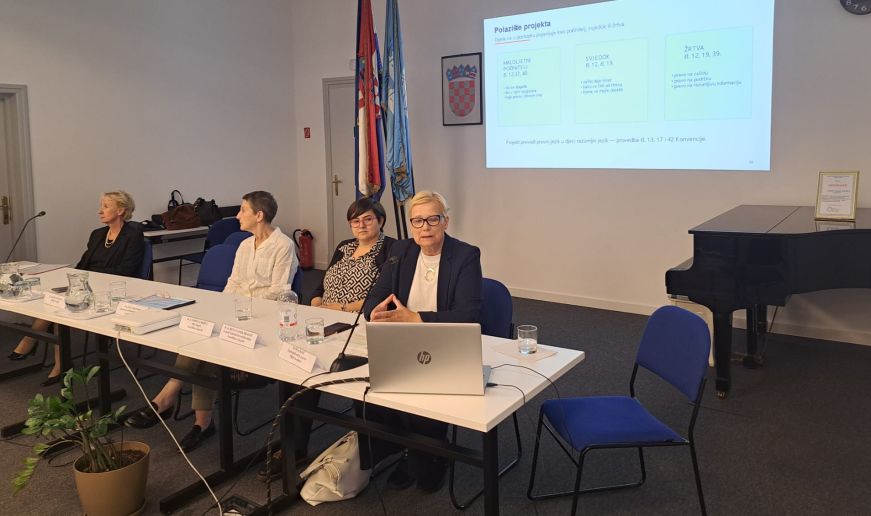
On Thursday, 11 June 2026, the expert conference “Children’s Rights in Criminal Proceedings – Child Witnesses, Victims, and Offenders” was held at the City of Zagreb Forum on Kaptol in Zagreb. The event focused on strengthening the protection of children’s rights and ensuring access to child-friendly information for children involved in criminal proceedings. Organized by the Association of Youth Judges, Family Judges and Experts for Children and Youth, the conference brought together numerous professionals engaged in the protection and well-being of children and young people.
Among the speakers was Professor Irena Cajner Mraović, PhD, Head of the Department of Sociology at the Faculty of Croatian Studies, University of Zagreb. She presented the project aimed at developing informational brochures for children involved in criminal proceedings and discussed its connection with the United Nations Convention on the Rights of the Child.
In her presentation, Professor Cajner Mraović emphasized that children may appear in criminal proceedings in various roles—as victims, witnesses, or offenders—and often face complex and intimidating procedures that they do not fully understand. The project is therefore based on the principle that children should not be treated merely as objects of legal proceedings but as rights-holders who have the right to understand what is happening, who is involved in the process, what their rights are, and where they can seek assistance.
The project team developed a range of informational materials tailored to different groups of children participating in criminal proceedings as victims, witnesses, or offenders. These materials include brochures, leaflets, procedural guides, and visual resources designed to explain children’s rights and responsibilities in a clear and understandable manner. The objective was to “translate” complex legal terminology into language accessible to children through concise messages, visual explanations, and age-appropriate information.
Discussing the significance of the project, Professor Cajner Mraović noted that children’s rights are not fully realized simply because they are enshrined in laws and international instruments. For these rights to be genuinely effective, children must be able to understand and exercise them. In this respect, the published materials represent a practical implementation of the Convention on the Rights of the Child by providing children with information in a form that is both accessible and meaningful to them.
Particular attention was given to children’s rights to information, participation, and protection. The publications serve four key functions: increasing access to information, ensuring that information is understandable, encouraging children’s active participation in proceedings, and reducing fear, uncertainty, and the risk of secondary victimization or retraumatization.
An important aspect of the project was the direct involvement of children in the development of the materials. Through focus groups with primary and secondary school students, the project team gathered feedback on both the content and design of the brochures. The findings demonstrated that children recognize the value of such resources and that they help them better understand legal procedures and their rights.
The conference also highlighted the importance of making these informational materials available wherever children encounter the justice and child protection systems, including schools, social welfare institutions, police departments, state attorney’s offices, and courts. This would ensure that children have access to relevant information throughout the entire process.
Alongside Professor Irena Cajner Mraović, presentations were delivered by Matea Babić from the County Court in Zagreb, Associate Professor Gordana Hržica, PhD from the Faculty of Education and Rehabilitation Sciences, University of Zagreb, Professor Sanja Bojanić, PhD from the Academy of Applied Arts, University of Rijeka, and Nedjeljko Marković from the NGO Pragma. The conference was moderated by Lana Petö Kujundžić, PhD, Judge of the High Criminal Court of the Republic of Croatia and President of the Association of Youth Judges, Family Judges and Experts for Children and Youth.
The project “Children’s Rights in Criminal Proceedings” is implemented with the support of the City of Zagreb and represents an excellent example of successful interdisciplinary cooperation aimed at promoting children’s rights through practical, accessible, and child-friendly information tools.